
The year is 2054, and I’ve just finished writing a new research paper on how the year 2026 stands as a pivotal threshold in the evolution of computational research, marked by the rapid maturation of Google’s multimodal AI ecosystem.
Before the seamless neural-interfaces we rely on today, early 21st-century researchers (2026) interacted with nascent, yet fiercely capable, foundational models like Gemini 3.2.
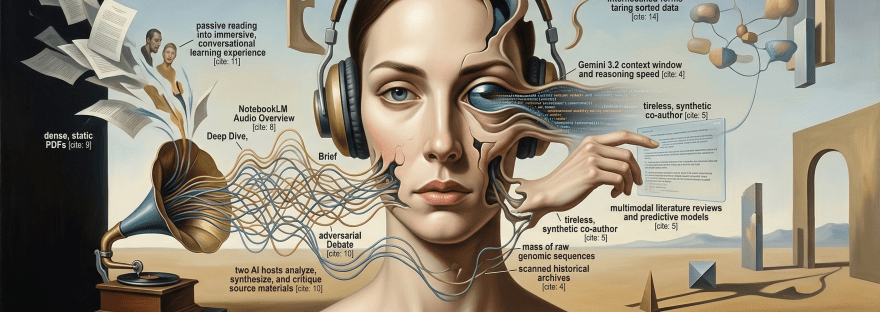
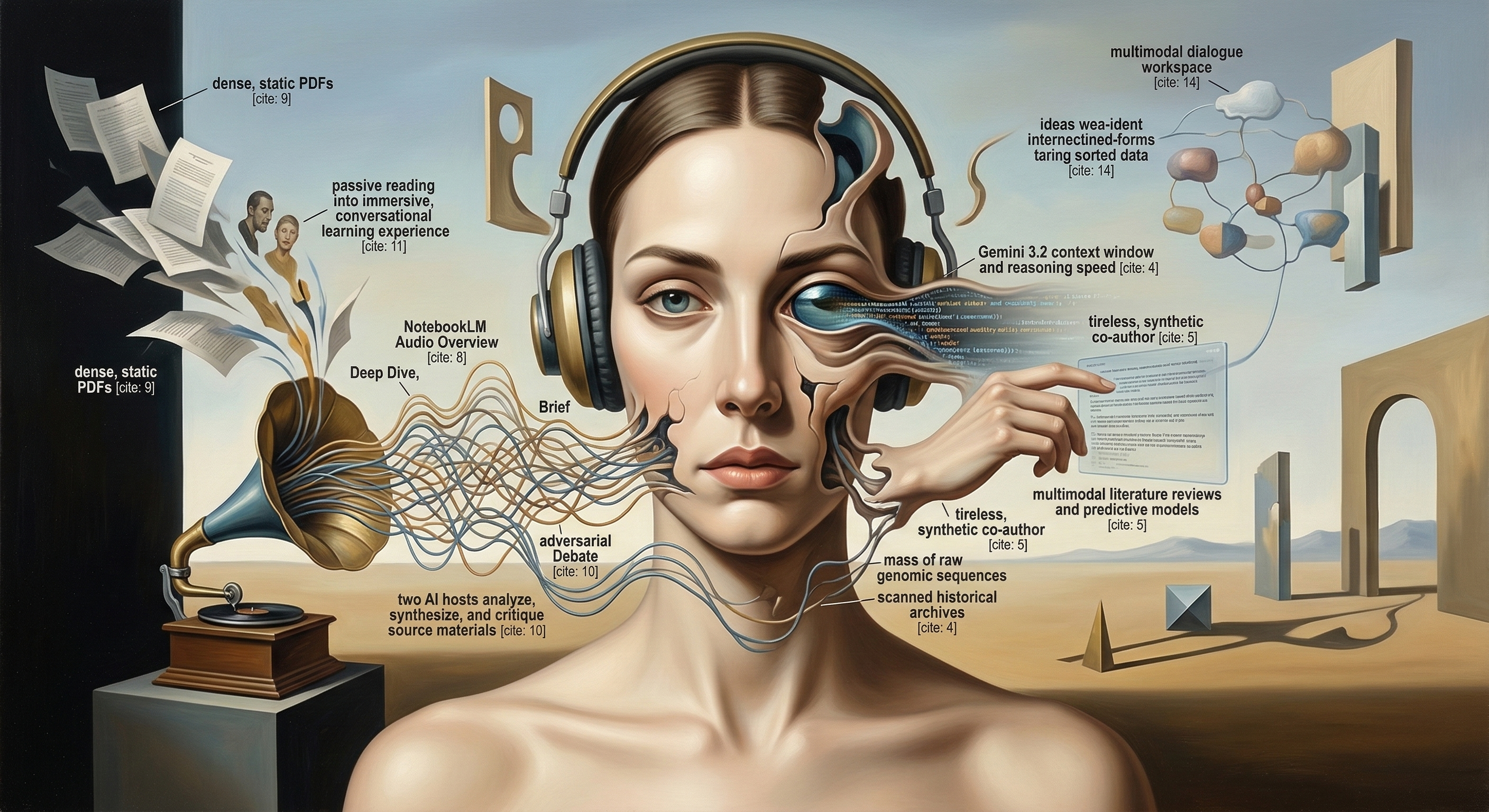
This iteration was celebrated for its unprecedented context window and reasoning speed, finally allowing scientists and academics to feed massive, disparate datasets—from raw genomic sequences to decades of scanned historical archives—into a single workspace.
For researchers of that era, Gemini 3.2 was less of a simple query engine and more of a tireless, synthetic co-author that could parse complex multimodal variables and instantly draft foundational literature reviews or predictive models, fundamentally accelerating the pace of initial hypothesis generation.
Transforming Static Data into Dynamic Dialogue
However, the true paradigm shift in daily academic workflow was catalyzed by an experimental, specialized tool known as NotebookLM. While we now take for granted that our data speaks to us directly, in 2026, NotebookLM’s “Audio Overview” feature was nothing short of revolutionary.
Researchers utilized this tool to ingest dozens of dense, static PDFs and instantly generate highly customized, lifelike auditory podcasts. Through formats like the expansive Deep Dive, the concise Brief, or the adversarial Debate, academics could actively listen to two AI hosts analyze, synthesize, and even critique their source materials. This allowed scholars to uncover hidden thematic connections during their commutes or lab work, effectively turning passive reading into an immersive, ambient, and conversational learning experience.
The Legacy of Early Synthesis Tools
Ultimately, the workflows pioneered with Gemini 3.2 and NotebookLM in the year 2026 laid the essential groundwork for the fully autonomous research symbiotes we utilize today in the mid-21st century.
By transforming rigid data analysis into dynamic, multimodal dialogues, these 2026 tools taught a generation of researchers how to collaboratively “converse” with their evidence rather than merely sort it.
Though rudimentary by our modern standards, these early systems normalized the idea of AI not just as a repository of knowledge, but as an active, sounding-board companion—a conceptual leap that forever altered the trajectory of human discovery.
 Abetica Studios
You must be logged in to post a comment.